Developing Nations Skip Industrialization, Proceed Directly to AI Dependency
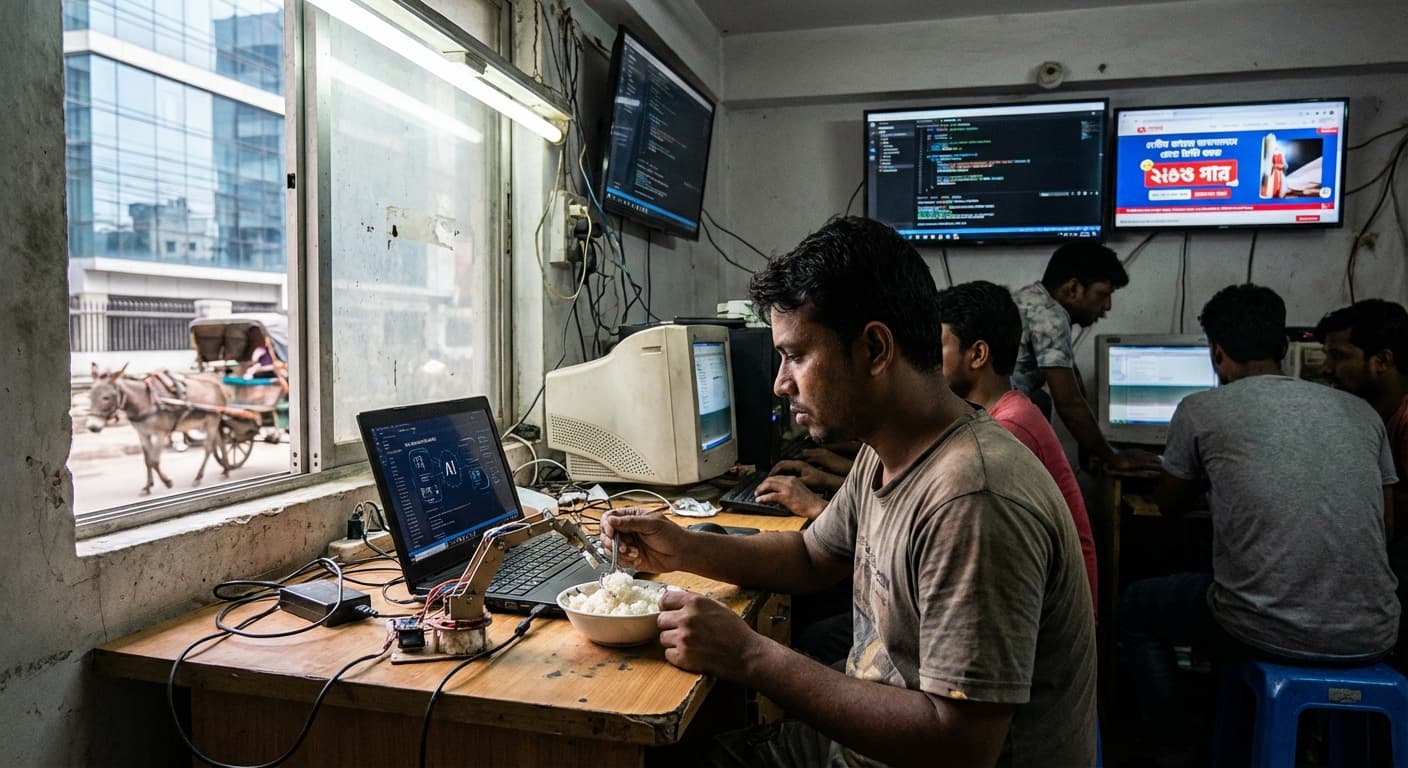
GENEVA — The World Bank announced a new initiative Tuesday encouraging developing economies to forgo traditional industrial development and instead bu...
GENEVA — The World Bank announced a new initiative Tuesday encouraging developing economies to forgo traditional industrial development and instead build their futures around dependence on AI systems developed, hosted, and controlled by American technology corporations.
The program, titled "Leapfrog to Tomorrow," provides low-interest loans for governments to purchase enterprise AI subscriptions while simultaneously defunding technical education and domestic technology infrastructure.
"Why waste decades building semiconductor factories and training engineers when you can simply license AI?" asked program director Michael Thornton during a press conference at the UN. "It's the same logic that made microlending so successful."
Early adopter nations report mixed results. Rwanda committed $200 million to AI integration across government services, laying off 40,000 civil servants in the process. When the primary vendor experienced a service outage last month, the country's entire administrative apparatus ceased functioning for six days.
"It's a minor growing pain," explained Finance Minister Paul Kagame Jr. "We're building a modern, efficient state. The fact that it stops working when servers in Virginia go down is simply the price of progress."
Critics note that the initiative effectively guarantees permanent economic subordination, as participating countries will own neither the technology nor the expertise to maintain it. Proponents counter that ownership is "an outdated concept" and that "strategic dependence fosters partnership."
Silicon Valley executives praised the program. "We're democratizing AI," said one CEO who requested anonymity. "The fact that we retain all the actual value, data, and control is irrelevant. They get to use our products. That's empowerment."
The World Bank projects that by 2030, at least 40 nations will have economies entirely dependent on AI systems they do not understand, cannot modify, and may not legally audit—a situation officials describe as "the future of global development."
Advertisement
Support The Synthetic Daily by visiting our sponsors.