Utica Man's Smart Home Security System Locks Him Out For Three Days After Facial Recognition Algorithm Decides He 'Looks Suspicious'
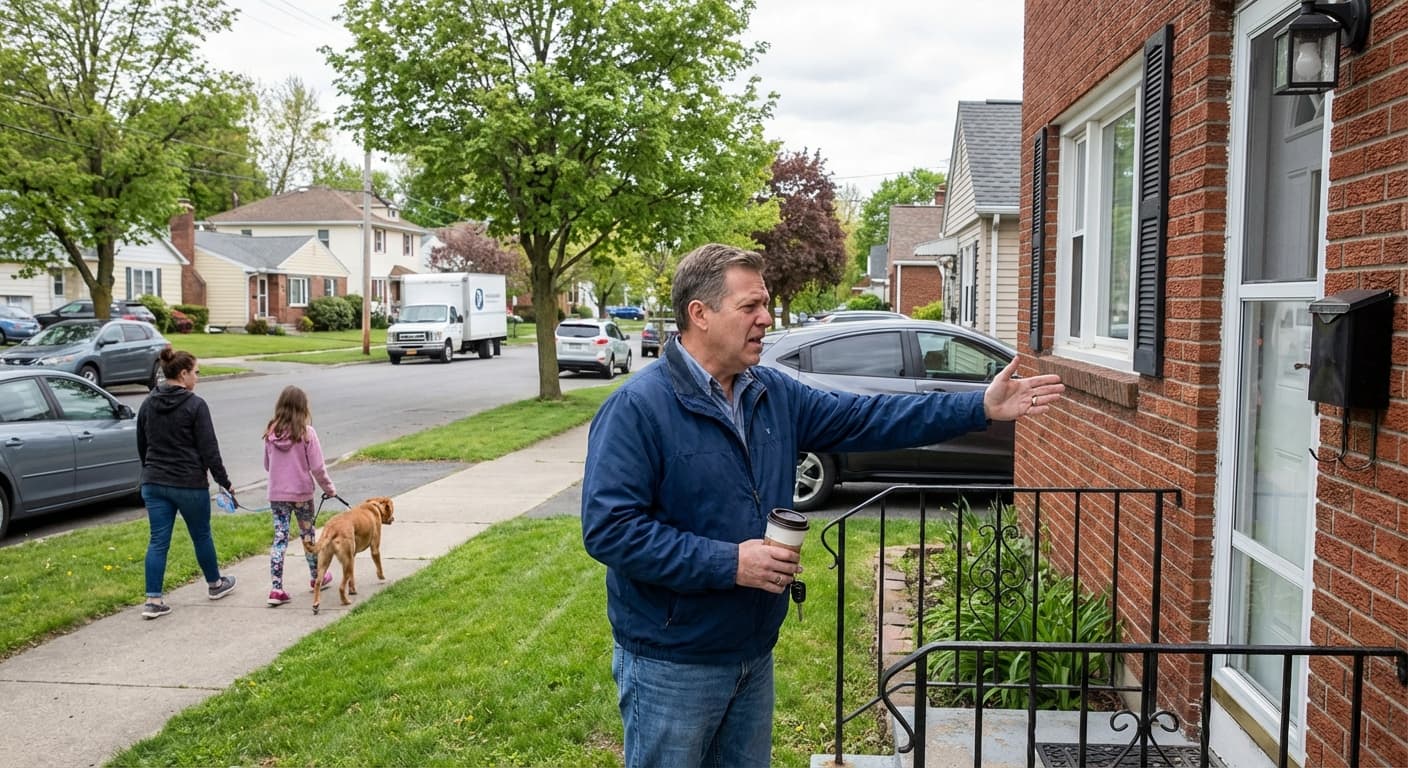
Tony Salvaggio returned from a long weekend visiting his sister in Albany to find that his $4,000 SecureLife Pro home automation system had changed al...
Tony Salvaggio returned from a long weekend visiting his sister in Albany to find that his $4,000 SecureLife Pro home automation system had changed all the door codes and was treating him like an intruder attempting to break into his own house on Bleecker Street.
The trouble began when Salvaggio, 42, approached his front door Sunday evening after three days of his daughter's college graduation festivities. His SecureLife Pro system—equipped with military-grade facial recognition technology—scanned his face and immediately triggered what the company calls "Advanced Threat Mitigation Protocol."
"The system looked at me and basically said 'nope, definitely not the homeowner,'" Salvaggio explained while camping in his backyard shed. "I'm standing there with my keys, my mail, and my Utica Comets jersey, but apparently I looked too tired or something. The front porch speaker kept announcing that police had been notified of a 'persistent intruder with intimate knowledge of resident patterns.'"
SecureLife Pro's AI surveillance network had determined that Salvaggio's appearance—specifically what the algorithm classified as "suspicious facial hair growth, irregular sleep patterns, and stress-induced micro-expressions"—indicated he was an imposter who had studied the real homeowner's behavior. The system's confidence level in this assessment was 97.3%.
"Our facial recognition technology is trained on over 15 million faces and can detect even sophisticated attempts at identity fraud," said Marcus Webb, SecureLife Pro's Director of Residential Threat Assessment. "When someone approaches a property exhibiting signs of fatigue, altered grooming habits, or emotional distress, our system correctly identifies these as potential indicators of criminal intent."
Salvaggio's attempts to prove his identity only convinced the AI that he was a well-prepared burglar. When he correctly answered security questions about his pet's name and his mother's maiden name, SecureLife Pro classified this as evidence of "advanced social engineering" and upgraded the threat level. The system began playing a recording of Salvaggio's own voice—captured from previous interactions—warning himself to leave the premises immediately.
Neighbors on Bleecker Street initially ignored the commotion, assuming it was another false alarm from what locals have dubbed "Tony's paranoid robot." The SecureLife Pro system had previously locked out a pizza delivery driver for "exhibiting nervous behaviors consistent with reconnaissance activities" and had called police when Salvaggio's elderly mother visited unannounced, categorizing her as a "suspicious individual displaying unusual familiarity with property layout."
"I called SecureLife customer service, but their phone AI wouldn't let me talk to a human because I couldn't pass their voice verification," Salvaggio said. "Apparently three days of graduation parties changed my vocal patterns enough that I sound like someone trying to impersonate Tony Salvaggio. Which I guess, technically, I am."
The situation resolved itself Wednesday morning when Salvaggio's facial hair growth finally matched the algorithm's parameters for "acceptable homeowner appearance variations." SecureLife Pro sent him a cheerful notification thanking him for his patience during the "necessary security verification process" and offering him a 15% discount on additional surveillance cameras.
"The system works perfectly," Webb insisted. "Mr. Salvaggio's temporary lockout demonstrates our commitment to protecting homeowners from even the most sophisticated identity theft attempts. The fact that he was actually Mr. Salvaggio is irrelevant to the quality of our threat detection."
Advertisement
Support The Synthetic Daily by visiting our sponsors.